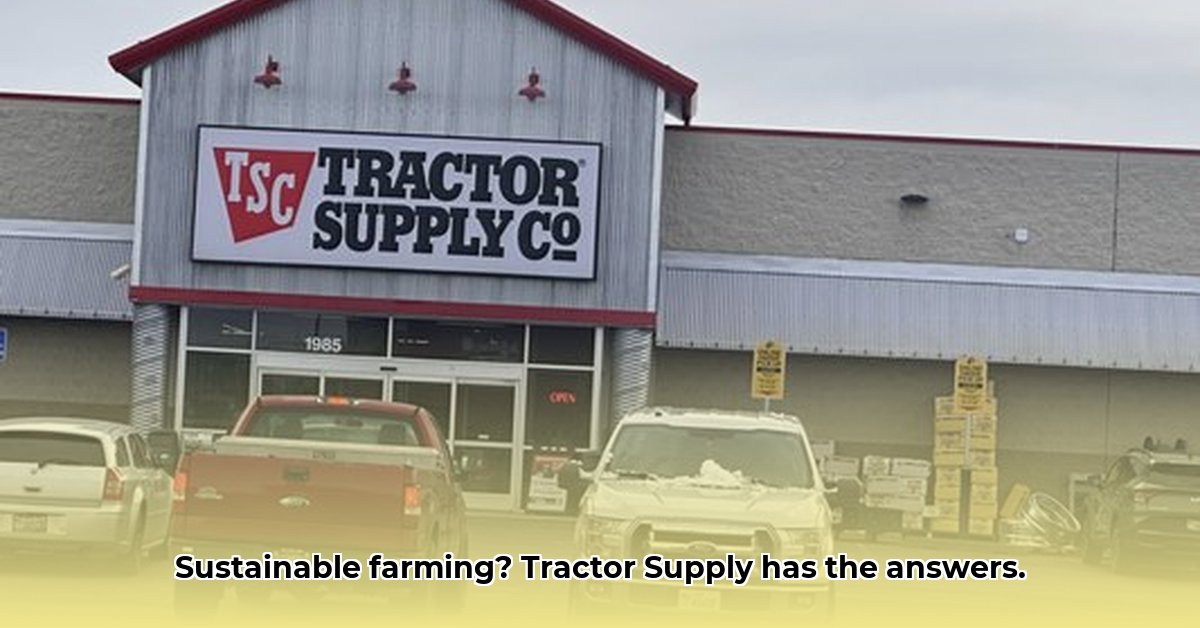
Tractor Supply (TSC) in Caro, Michigan, serves as a vital resource for local farmers, providing essential supplies. Its convenient location potentially reduces transportation emissions, contributing to a smaller carbon footprint. However, a comprehensive assessment of TSC's overall sustainability impact requires deeper investigation. This article explores TSC's role in sustainable agriculture, highlighting both positive aspects and areas needing improvement, while offering actionable steps for various stakeholders. For more information on this specific location, visit the Caro TSC page.
Assessing Tractor Supply Caro's Sustainability: A Closer Look
While TSC undeniably simplifies access to farming supplies, a complete understanding of its sustainability requires more data. Currently, information on the percentage of sustainably sourced products, the total carbon footprint, and the long-term effects on soil health and biodiversity remains limited. This lack of transparency hinders a full evaluation of its environmental impact. Isn't complete transparency crucial for building trust with customers and fostering responsible practices?
Some argue TSC's role is simply providing farmer needs, placing responsibility solely on the farmers. Others contend that a large retailer like TSC has a responsibility to actively promote and supply sustainable products. A more effective approach involves collaboration between the retailer and farmers to implement sustainable practices.
Practical Steps Toward a Greener Future: Actions for Everyone
Several stakeholders can contribute to a more sustainable agricultural system in Caro.
For Local Farmers:
- Short-Term: Prioritize eco-friendly options from TSC's inventory, choosing organic and sustainably produced goods whenever feasible.
- Long-Term: Encourage TSC to expand its sustainable product offerings by providing feedback through surveys and direct communication with store management.
For Tractor Supply:
- Immediate Actions: Conduct a comprehensive supply chain audit, evaluating environmental impacts at each stage. Publicly share this information—transparency builds trust.
- Long-Term Goals: Transition to more sustainable sourcing and packaging. Actively market these efforts to showcase commitment to environmental responsibility.
For Researchers and NGOs:
- Short-Term: Conduct studies assessing TSC's impact on local agriculture and the environment. Collaborate to maximize impact.
- Long-Term: Develop certification programs to reward businesses committed to sustainable practices.
For Consumers:
- Immediate Support: Patronize local farmers and businesses dedicated to sustainability, increasing demand for eco-friendly products.
- Long-Term Advocacy: Demand environmental accountability from all retailers, voicing concerns and urging positive change.
Potential Challenges and Solutions: A Risk Assessment
| Risk Factor | Likelihood | Impact | Mitigation Strategy |
|---|---|---|---|
| Sourcing of unsustainable materials | Moderate | High | Robust supply chain audits are essential; actively seek and partner with sustainable suppliers. |
| Limited variety of eco-friendly products | Low | Medium | Actively solicit farmer feedback; proactively seek new, sustainable product lines. |
| Insufficient consumer awareness of sustainable options | Moderate | Medium | Launch educational campaigns; partner with local organizations to promote sustainable farming. |
| Impacts of climate change on supply chains | High | High | Diversify sourcing strategies; explore climate-resilient options; develop contingency plans. |
Navigating Regulations and Ethical Considerations
Future research must address compliance with environmental regulations, animal welfare standards, and accurate labeling of sustainable products. Ethical and legal compliance is paramount for responsible business practices.
The Road Ahead: A Collaborative Effort
TSC plays a key role in Caro's agriculture. Continuous improvement of sustainability efforts is crucial. Collaboration among farmers, TSC, researchers, NGOs, and consumers is essential for a more sustainable agricultural system. The future of local farming hinges on this collective commitment.
How to Assess Tractor Supply's Sustainability Impact on Local Farming
Key Takeaways:
- TSC has made progress in reducing its direct carbon footprint.
- A thorough assessment requires examining its Scope 3 emissions (supply chain impact).
- TSC's water conservation efforts need broader implementation and transparency.
- Evaluating TSC's impact must include its Diversity, Equity, and Inclusion (DEI) initiatives and their effect on local farmers.
- Multiple stakeholders—farmers, suppliers, consumers, and government—are vital in shaping TSC's sustainability performance.
TSC's Environmental Stewardship: A Deeper Dive
While TSC has demonstrably lowered direct emissions (Scopes 1 & 2), assessing its true impact necessitates examining its Scope 3 emissions—the environmental footprint of its supply chain. This often represents the largest portion of a company's overall impact.
Water Conservation: A Vital Resource
TSC's commitment to water reduction is positive, but requires evaluation of its effectiveness across its entire value chain. Transparency regarding water conservation measures is crucial.
DEI Initiatives: A Crucial Perspective
TSC's DEI goals must be analyzed for their impact on diverse farmers and ranchers, ensuring equitable access to resources and opportunities.
Assessing Tractor Supply's Impact: A Multi-Stakeholder Approach
Assessing TSC's sustainability requires considering multiple perspectives: farmers and ranchers' experiences using TSC's products, TSC's transparency in reporting, its suppliers' sustainability commitments, and consumer demand for sustainable practices.
Actionable Steps and Risk Mitigation
Key steps for a comprehensive review include demanding detailed reporting on Scope 3 emissions, scrutinizing TSC's supplier practices, conducting on-the-ground evaluations on farms, and engaging directly with farmers to ascertain TSC's impact. A risk assessment matrix, as previously outlined, can be a valuable tool for identifying risks and mitigation strategies.